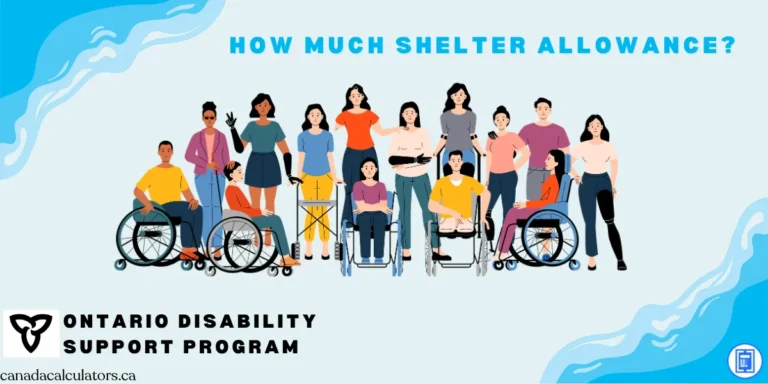

If you live in Ontario with disabilities, going through the ODSP rules can make you feel overwhelming. Thousands of recipients depend on Ontario Disability Support Program for their daily needs and support for housing. ODSP Shelter Allowance represents the single largest source of confusion for thousands of applicants and existing recipients.
When your monthly payment arrives, it is common to wonder why your housing coverage does not automatically equal the maximum ODSP Shelter Allowance listed on the official benefit table. Understanding the ODSP Shelter Support calculation relies on understanding how actual expenses interact with provincial statutory caps.
This article covers everything you must know about ontario disability living support, maximum limits, official rates, impacting factors, and tips to maximise the payment.
What is ODSP Shelter Allowance?
The ODSP Shelter Allowance is one of the two main components of your monthly income support available for helping offset housing expenses. Unlike the ODSP basic needs allowance, which is paid out as a lump-sum payment, the ODSP housing support payment works on a reimbursement model.
Irt means, government has fixed the maximum housing support based on family size or number of dependents. However, the program does not issue a straight payment equal to the maximum. Instead, MCCSS calculates your PwD shelter allowance using a standard formula.
| You receive the lower figure between your verified actual monthly shelter costs and your household’s maximum statutory cap. |
Official 2026 ODSP Shelter Allowance Caps: Maximum Payments
The provincial government updates ODSP payment rates annually to align with inflation and cost-of-living hikes. As of July 1, 2026, with cost-of-living adjustments (+1.9%), the official maximum ODSP Shelter Allowance caps are settled across family sizes as follows:
| Household Size | Maximum Monthly Housing Allowance (Before July 2026) | Maximum Monthly Housing Allowance (From July 1, 2026) |
| Single Individual | $599 | $611 |
| Couple / Sole-Support Parent + 1 Child | $941 | $959 |
| Family of 3 (e.g., Couple + 1 Child or Parent + 2 Children) | $1,018 | $1,038 |
| Family of 4 (e.g., Couple + 2 Children) | $1,105 | $1,126 |
| Family of 5 | $1,192 | $1,215 |
| Family of 6 or More | $1,235 | $1,259 |
What ODSP Shelter Allowance Covers?
Some recipients receive less than they need because they did not report every eligible expense to their caseworker. The ODSP Shelter Allowance covers more than just your monthly rent. When submitting required documents, you can include the following primary housing overheads:
Rent Payments
- Monthly rent and mandatory building security cable fees
- Required telephone or cable charges (if required)
- Garbage collection and shared laundry charges
Mortgage Payments
- Principal, Interest, and eligible home purchase loan payments
Property Taxes
- Property taxes included in a mortgage and separately billed
Rent-to-Own Costs
- Occupancy payments made under an agreement to purchase a home
Home Insurance
- Fire and home contents insurance premiums
- Eligible furnace or heating maintenance insurance plans
Temporary Second Residence
- Up to $455 per month for a temporary second residence required for approved employment or training purposes (if eligibility conditions are met)
Co-operative Housing Fees
- Mandatory co-op housing and building maintenance charges
- Snow removal and garbage collection fees
- Other required common expenses
Condominium House Fees
- Mandatory condo and common area maintenance fees
- Groundskeeping and snow removal fees
- Garbage collection and mandatory condo fees
- Heating costs included in condo fees
Important Exclusions
- Parking fees (even if mandatory)
- Optional cable, internet, or phone services
- Non-essential housing services
- Home equity loan or line of credit payments used for debt consolidation
- Mortgage borrowing that is not for purchasing the home or making necessary repairs
Note: If your base rent is $500 per month and your monthly hydro/water utilities average $130, reporting only your rent keeps your ODSP Shelter Allowance at $500. Submitting your utility bills increases your verified shelter expenses to $630. This helps a single recipient to claim the full single-person maximum allowance.
How the Calculation Works: Understand with Example
To analyze how the ODSP Shelter Allowance works practically, consider three common scenarios under current rate guidelines:
| Scenario | Housing Situation | Actual Eligible Shelter Cost | Maximum ODSP Shelter Allowance | ODSP Pays | Result |
| Case 1 – High Rent | Single recipient renting an apartment | $850 | $611 | $611 | Rent exceeds the limit, so ODSP pays the maximum. The recipient pays the rest $239. |
| Case 2 – Low Rent / Room Rental | Single recipient renting a room (utilities included) | $480 | $611 | $480 | Actual shelter cost is below the limit, so ODSP pays only the actual eligible expense. No extra amount is paid. |
| Case 3 – Homeowner | Parent with one child living in a mortgage-free condo | $980 (Condo fees $600 + Property taxes $220 + Heating $160) | $959 | $959 | Eligible shelter costs exceed the family maximum, so ODSP pays the maximum shelter allowance. |
Special Exceptions: Board and Lodge vs. Shelter Rules
The standard ODSP Shelter Allowance is calculated strictly bsaed on self-contained housing situations. Different rules apply under alternate living arrangements:
- How Does Board and Lodge System Impacts ODSP Shelter allowance: If you live with a landlord/relative/family person who offers you both living plus food, ODSP does not evaluate your rent and utilities separately. Instead, you receive a flat Board and Lodge rate. Currently rate is $1,065 per month for a single person + $71 Special Boarder Allowance.
- Why Severe Heating Expenses Excepted: Under ODSP Policy, if someone’s heating expenses is more than their maximum family shelter allowance (common during winter in northern regions), ODSP can issue funding to cover the actual heating bill rather than enforcing the standard cap.
How Homeownership Impact Ontario Disability Support
Homeowners often get confued whether having a own house disqualifies them from receiving ODSP housing allowance benefit. Under ODSP asset guidelines, your primary residence is completely exempt from asset limits. ($40,000 for single individuals and $50,000 for couples).
You can receive an ODSP Shelter Support as a homeowner to cover mortgage interest, principal, property taxes, and home insurance premiums. This can be claimed for an amount based on your family size. However, secondary properties or rental real estate are non-exempt assets and will impact overall program eligibility.
Maximizing ODSP Shelter Housing Support
If your current PwD Housing Support seems lower than your actual living expenses:
- Audit Your Complete File: Request an updated detailed breakdown of your shelter allowance calculation from your caseworker. It is necessary to verify if every utility and insurance bill is included.
- Additional Housing Grants: Apply for supplemental Ontario Housing Support from external programs, such as the Canada-Ontario Housing Benefit (COHB). This is exempt from ODSP income clawbacks and can provide additional direct rent relief alongside your ODSP Shelter Allowance.
- Submit Documents for Annual Adjustment: When property taxes, condo fees, or utility rates rise, submit updated papers to your caseworker, reporting every change to ensure your ODSP Shelter Allowance updates to match your revised household costs.
Frequently Asked Questions
Which repeated expenses are mainly excluded from shelter allowance?
Parking Expenses, optional cable TV, basic internet access, telephone landlines, and past-due utility/rent arrears cannot be included in the shelter calculation.
What if my actual rent and utility costs are less than the maximum shelter limit?
ODSP shelter allowance is paid up to your actual verified shelter expenses. For example, if rent +utility total expense is $500, you receive $500 for shelter (plus their $825 basic needs). In this case, you do not get the full $611.
How is the shelter allowance calculated if you own a home with a mortgage?
Homeowners can claim their monthly mortgage principal amount, interest payments, municipal property taxes, home insurance, and utility bills. The ministry adds these allowable verified expenses up to the maximum shelter limit for your family size.
Can I claim a Second Home Shelter Allowance?
Yes, if you maintain a second residence to attend an approved employment training or rehab program, ODSP can provide a supplemental 2nd shelter amount of up to $455 per month.
How are seasonal winter heating bill fluctuations handled?
Higher winter heating bills are reported each month. You can also use an equalized billing plan to spread the cost over the year in 12 installments.
How does renting a room affect your shelter payment?
ODSP deducts part of the rental income from your eligible shelter costs. The amount is generally 60%, or 40% if meals are provided.
What shelter allowance is provided in social/subsidized or Rent-Geared-To-Income housing?
For RGI (Rent-Geared-to-Income) housing, ODSP considers your subsidized rent and eligible utility costs. The shelter amount is based on these actual costs.



Pingback: ODSP Monthly Amount by Family Size: Complete Rate Table 2026 - Canada Calculators Blog
Pingback: ODSP Basic Needs Amount 2026: What's Included and How It's Calculated - Canada Calculators Blog