
An unexpected illness, short-term disability, minor or major injury, surgery, or needed medical isolation can force you to leave work and stop earning. These life incidents can disrupt your regular income. During these critical circumstances, it becomes difficult to pay rent, household expenses, and other essentials.
To resolve this issue, the Employment Insurance or EI Sickness Benefits Program helps workers by offering short-term economic assistance. This is intended to support workers during their inability to work and earn income for medical reasons. The program is administered by Service Canada under the Employment Insurance Act.
It is important for workers to know the EI Sickness Benefits Eligibility requirements, required insurable hours, medical documents, approving authorities, weekly benefit limits, and maximum benefit period. This article covers everything you need to know, helping you understand your options and apply for support while you recover.
Table of Contents
What Is the Employment Insurance EI Sickness Benefit?
The EI Sickness Benefit is a specific federal income-support type that is designed for eligible employed and self-employed individuals. Sickness Benefit is dedicated to those workers who face an interruption in earnings due to any severe illness.
Unlike other regular employment insurance benefits, which require applicant workers to be willing to work, the EI Sickness Benefit considers that your medical circumstances prevent you from performing your daily job tasks.
| EI Sickness Benefit | Details |
| Program Administration | Service Canada |
| Standard Benefit Rate | 55% of average insurable pay |
| Maximum Weekly Payment | $729 Per Week |
| Maximum Duration | Up to 26 weeks |
| Required Insurable Hours | 600 hours |
| Medical Proof | Official medical certificate |
Eligibility Requirements for EI Sickness Benefits
To be eligible for the Employment Insurance Sickness Benefits, you must meet the four major conditions of the Employment Insurance Benefits program:
Proven Medical Incapability to Work
You must be medically incapable of working due to an illness, injury, isolation, or treatment rules. This may include:
- Physical injuries (minor/major)
- Scheduled surgical procedures
- Recovery time period
- Diagnosed mental health conditions
- Clinically proved depression
- Severe anxiety
- Occupational burnout.
Reduction in Weekly Income for Sickness Benefits
Your normal weekly earnings from employment must decrease by more than 40% for at least one calendar week. You are required to provide the proper income documents to prove the eligible reduction in your weekly income.
Minimum Insurable Employment Hours
You must have accumulated at least 600 insurable hours during your qualifying period. Generally, it is 52 weeks immediately preceding the claim start date or the period since the start of your last EI claim (whichever is less).
Premium Contributions for EI Sickness Benefits
You must have worked in insurable employment where standard Employment Insurance premiums were deducted from your pay by your organisation. Self-employed workers who have voluntarily registered with the Canada Employment Insurance Commission for at least 12 months are also eligible.
2026 EI Sickness Benefit Rates: How Much Could You Receive?
For most applicants, the EI Sickness Benefit stream pays 55% of your average weekly insurable earnings up to a maximum limit.
EI Sickness Maximum Insurable Limit
| EI Sickness Benefit Limit | Amount |
| Maximum Yearly Insurable Earnings (MIE) | $68,900 |
| Maximum Weekly Payout | $729 Per Week before taxes |
Because EI benefit payments come under taxable income, federal and provincial income taxes are automatically withheld at source before the funds are deposited into your account.
| Gross Average Insurable Earnings | Weekly Payout Calculation |
| $900 Per Week | 55% Benefit = $495 Per Week |
| $1,200 Per Week | 55% Benefit = $660 Per Week |
| $1,600 Per Week | Capped at $729 Per Week (Maximum) |
Note: Low-income families earning less than or equal to $25,921, residing with dependent children, and receiving CCB may qualify for an EI Family Supplement. CCB can increase EI benefits up to 80% (maximum $729/week).
“Best Weeks” Calculation for Sickness Benefits
To calculate your weekly rate for the EI Sickness Benefit, Service Canada uses a formula rather than averaging all 52 weeks of the year.
- Best Weeks Selection: The number of highest-earning weeks is selected between 14 and 22 during your 52-week qualifying period. The exact number of weeks used is evaluated by the unemployment rate in your local economic region.
- Weekly Insurable Average Calculation: Total income during those best weeks is added and divided by the required number of regional weeks.
- 55% Rate Application: The resulting weekly Insurable average is multiplied by 55% to establish your gross weekly benefits entitlement.
This best week selection method ensures that irregular periods of low income, partial shifts, or unpaid leave do not unfairly decrease your sickness benefit rate.
Weeks Available for EI Sickness Benefits
Eligible claimants can receive the EI Sickness Benefit for up to 26 weeks. The exact number depends on the estimated recovery timeline indicated by your medical practitioner.
- If your doctor clarifies that you need 10 weeks to recover from surgery, your benefit is approved for 10 weeks.
- If your recovery is longer than the anticipated duration, an extended recovery certificate is required for up to the maximum 26-week limit.
There is a mandatory one-week unpaid waiting period at the start of every claim before benefit payments begin.
Certificate Required for EI Sickness Support
To approve your claim, you must obtain a complete medical certificate that must be signed by an authorized healthcare professional.
Who can be your authorized medical practitioners to approve?
Service Canada accepts medical certifications approved and signed by:
- Licensed Medical Doctors / Physicians
- Nurse Practitioners
- Registered Specialists/Surgeons/Psychiatrists
- Chiropractors (in specific scenarios)
Required Details or Documents for EI Sickness Application
- You can use the official Service Canada Medical Certificate for Employment Insurance Sickness Benefits (Form INS5140).
- Or a comprehensive medical note on official clinic letterhead
You are not required to disclose confidential, granular medical details or specific lab test results. The application form needs only to verify the functional inability that prevents you from performing your job and earning.
Medical documentation must clearly mention
- Incapacitated Day and Date
- Why you are medically unable to work.
- Expected start date of your medical leave
- Anticipated end date of your medical leave
- The official licensing details of the certificate issuer
- Signature, Seal, Stamp and Clinic address of certificate issuer
WWC or Working While on Sickness Claim
Under the Working While on Claim (WWC) rules, EI Sickness Benefit recipients who start small tasks or a part-time return-to-work program or perform light duties are permitted to earn income:
| Rule | How It Works |
| 50% Rule | Keep 50¢ of EI Benefits for every $1 earned. Up to 90% of previous weekly insurable earnings. |
| Above 90% Threshold | Deducted dollar-for-dollar from EI benefits. |
| Reporting Required? | Yes, Bi-Weekly Reporting |
This system supports small and gradual or part-time return-to-work plans recommended by your doctor without abruptly cutting off all income support.
How to Apply for Sickness Benefits in Canada?
- Submit your EI Sickness benefits online application as soon as possible after you stop working. Delays of more than 4 weeks may affect or disqualify your benefits.
- Generally, employers submit the digital ROE (Record of Employment) online to Service Canada.
- You can check its ROE Submission status through My Service Canada Account (MSCA).
- Keep all your signed medical certificates and illness documents ready in case Service Canada demands them later.
In Short
Experiencing a sudden illness/injury/short-term disability is stressful without financial security. The EI Sickness Benefit provides up to 26 weeks as an important income replacement. EI pays up to 55% (up to $729 per week) of your insurable earnings.
It is essential to secure your sickness benefits through medical certificates as soon as possible, verify your 600 insurable hours, and apply promptly online; you can protect your financial security and concentrate fully on your recovery.
Frequently Asked Questions
How many insurable hours do I need for EI Sickness Benefits?
Minimum 600 insurable hours worked in your 52-week qualifying period.
What is the weekly benefit rate and maximum payout in 2026?
The rate is 55% of your average insurable earnings, with a maximum of $729/week.
How long can I receive EI Sickness Benefits?
You can receive financial support for up to 26 weeks. It also depends on the recovery duration recommended by a health professional.
Is a medical certificate required to apply for EI Sickness Benefits?
Yes, you must submit a signed medical certificate from an authorized medical practitioner mentioning that you are not able to work and the date you will be fine.
How EI Sickness Benefits Eligibility Calculator at CanadaCalculators.ca help?
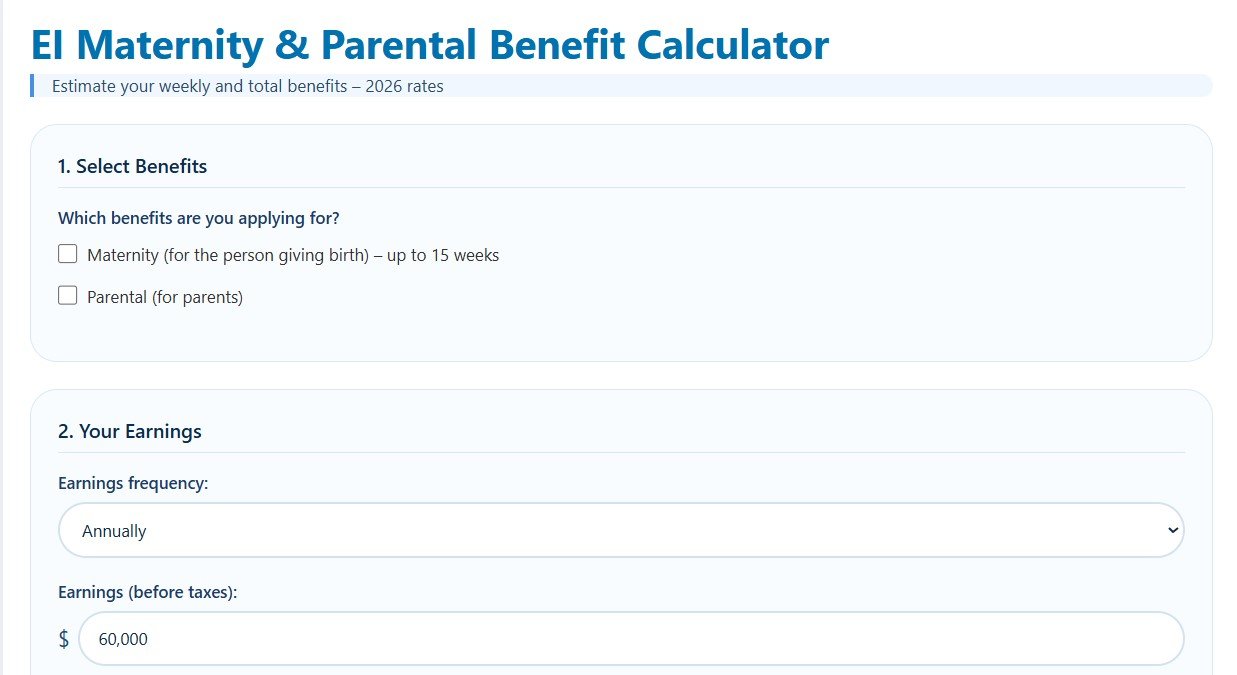
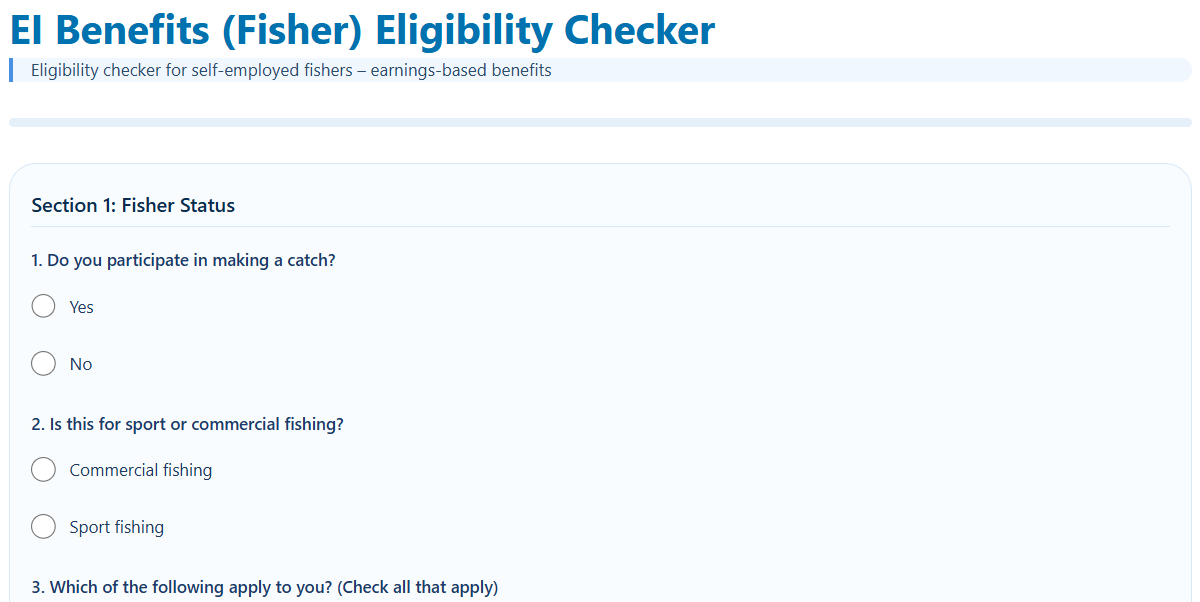
It determines your total worked hours, weekly income, and employment situation to quickly check whether you satisfy sickness benefits eligibility rules.
How can I calculate EI sickness benefits?
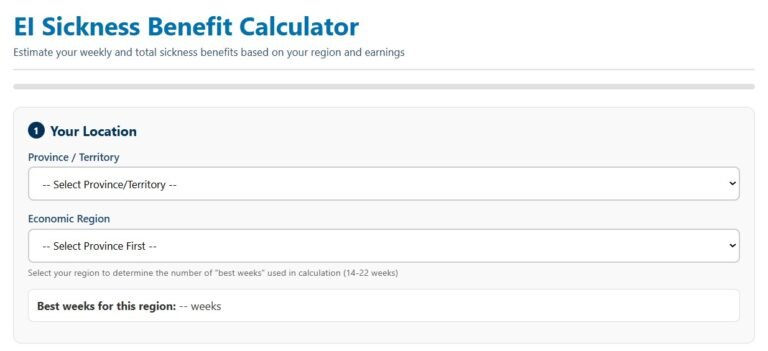
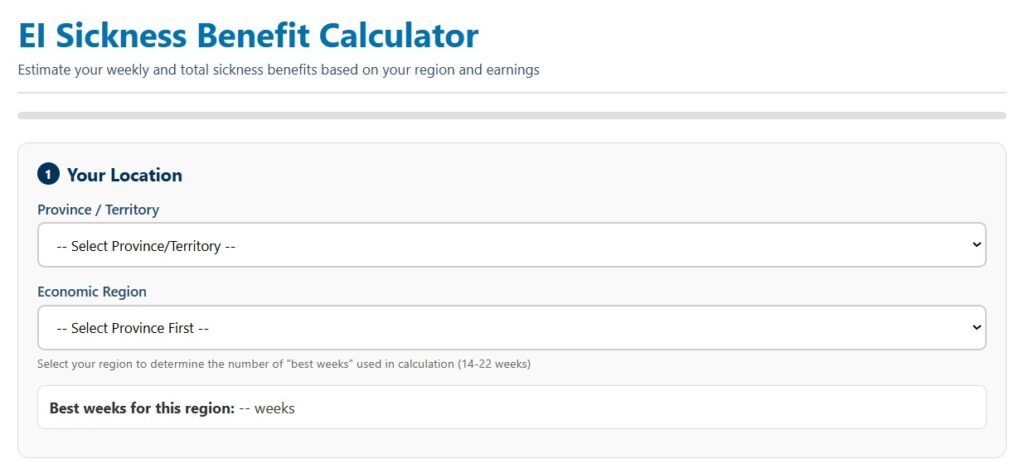
You can estimate your sickness benefits payment using the EI Benefits Sickness Calculator at CanadaCalculators.ca.
Can self-employed individuals claim EI Sickness Benefits?
Yes, self-employed people who are enrolled in the EI Special Benefits Program can claim at least 12 months before and meet the minimum self-employed net earnings requirement.
Is there any unpaid waiting period during Sickness benefits?
Yes, there is generally a 1-week unpaid waiting period before starting payments.
Are EI sickness benefit payments taxable?
Yes, EI illness benefit payments are taxable. Federal/provincial income taxes are deducted directly from each biweekly payment.
When should I apply for EI Sickness Benefits?
You should apply immediately after you stop working; delaying your application beyond 4 weeks from your last day could result in lost benefits.